


The Problem Most Bearded Men Do Not Know They Have
You finish a shower, dry your beard, and run your hand through it.
It feels dry, rough, and wiry.
Most men think that is normal. It is not.
The problem is often the shampoo sitting in your shower. Regular hair shampoos can contain strong detergents and sulfates that strip away the oils your beard needs, leaving it dry, itchy, and prone to beardruff.
Your beard is not the problem.
Your wash routine is.
Expert Tip: Wash your beard only 2 to 3 times per week. Over-washing can strip natural oils, even with a gentle beard shampoo.
Why This Guide Exists?
The natural beard care market is full of products claiming to be “natural” and “organic.” But many still contain ingredients that do not match those promises.
This guide cuts through the marketing and focuses on what actually matters: ingredients, cleansing performance, beard feel after washing, and whether a product truly helps with dryness and beardruff.
Products were evaluated through ingredient research and practical grooming testing to find natural beard shampoos that clean well without leaving your beard feeling dry or damaged.
This article may contain affiliate links. If you buy through them, we may earn a commission at no extra cost to you.
By the end of this guide, you will know which beard shampoo ingredients work, which ones to avoid, how often to wash without drying out your beard, and which of the seven all-natural beard shampoos fits your skin type, beard texture, and budget.
You will also get a simple ingredient checklist to help you make smarter choices when buying your next beard wash.
What “All Natural” Really Means on a Beard Shampoo Label
What “All Natural” Really Means on a Beard Shampoo Label
The word “natural” on a beard shampoo bottle does not automatically mean better. In personal care products, terms like natural and organic are not always strictly regulated. A brand can highlight botanical ingredients while still using harsh cleansers that leave your beard dry and itchy.
The ingredient list matters more than the front label.
A good all-natural beard shampoo should clean your beard without stripping the oils that keep it soft and your skin comfortable. If your beard feels rough after washing or you notice beardruff, your shampoo may be too aggressive.
Common Certifications Explained
USDA Organic
Verifies that certain ingredients meet organic farming standards.
Confirms:
- Organic ingredient sourcing
- Approved farming and processing methods
Does not confirm:
- Better beard results
- No irritation
- A perfect formula
COSMOS
A global standard for natural and organic cosmetics.
Confirms:
- Ingredient sourcing
- Manufacturing standards
- Restrictions on certain chemicals
Does not confirm:
- That the shampoo suits your beard type
- That it will soften every beard
NSF Organic
Focuses on organic ingredient claims and product transparency.
Confirms:
- Organic standards
- Ingredient documentation
Does not confirm:
- Beard performance
- Skin compatibility
Leaping Bunny
A cruelty-free certification.
Confirms:
- No animal testing requirements are met
Does not confirm:
- Natural ingredients
- Product effectiveness
Certifications tell you how a product is made. They do not tell you if it will work for your beard.
Ingredients to Look For
Aloe Vera: Helps soothe and hydrate skin.
Jojoba Oil: Helps soften beard hair without feeling heavy.
Argan Oil: Adds moisture to dry, rough beards.
Coconut-Derived Cleansers: Often provide gentler washing compared to harsher detergents.
Ingredients to Be Careful With
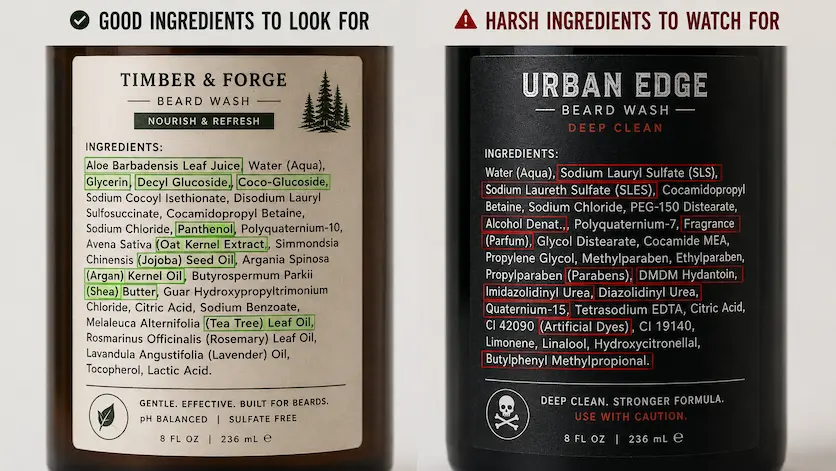
SLS (Sodium Lauryl Sulfate): Creates strong lather but can strip oils and dry facial skin.
SLES (Sodium Laureth Sulfate): Milder than SLS but may still irritate some beard owners.
Synthetic Fragrance: Can trigger itching for sensitive skin.
Drying Alcohols: Some alcohols can make beard hair feel rough. Fatty alcohols like cetyl alcohol are different and can be conditioning.
Why pH Matters
Your face is more sensitive than your scalp. A shampoo that works on your head may leave your beard feeling dry.
A good beard shampoo should clean without leaving your beard feeling stiff or “squeaky.”
Fresh is good.
Stripped is not.
Greenwashing Red Flags: How to Spot a Fake Natural Beard Shampoo
A beard shampoo is not natural just because the bottle says “natural.”
Always check the ingredient list, not just the front label.
- Natural oils listed after the first five ingredients: A product claiming “with argan oil” or “with coconut oil” may only contain tiny amounts if those oils appear near the bottom of the list.
- “Naturally derived” does not always mean gentle: Plant-derived surfactants can still become harsh detergents that strip your beard and leave your skin dry.
- Hidden fragrance ingredients: Terms like “fragrance” or “parfum” do not reveal what is inside. Strong fragrance blends can irritate sensitive skin.
- One or two natural ingredients do not make a natural formula: Adding aloe, tea tree oil, or shea butter does not cancel out a formula full of harsh synthetic ingredients.
- Green packaging means nothing: Leaves, earthy colors, and nature images are marketing. Look for the actual ingredients and trusted certifications.
The rule is simple: Ignore the front label. Read the ingredient list.
The Ingredient Decoder Checklist
Use this quick label guide when shopping for an all-natural beard shampoo. A good formula should clean your beard without leaving it dry, rough, or irritated.
| ✓ Look For | ✕ Avoid |
| ☐ Jojoba oil | ☐ Sodium lauryl sulfate (SLS) |
| ☐ Argan oil | ☐ Sodium laureth sulfate (SLES) |
| ☐ Glycerin | ☐ Parabens |
| ☐ Tea tree oil | ☐ Phthalates |
| ☐ Chamomile extract | ☐ Synthetic fragrance |
| ☐ Aloe vera | ☐ Silicones |
| ☐ Shea butter |
Quick Tip:
Look for moisturizing oils and soothing extracts. Avoid harsh ingredients that can strip your beard and trigger dryness or beardruff.
The Biology of Beard Hair: Coarse, Curly, and Thirsty
Beard hair is not the same as scalp hair. It is usually thicker, rougher, and more irregular in shape. The curls and bends in beard hair make it harder for natural oils to move from the skin to the ends, which is why longer beards often feel dry, wiry, and rough.
The biggest mistake many men make is using regular scalp shampoo on their beard. These shampoos are designed to remove oil from the scalp, but on facial hair they can strip away too much moisture and leave the beard feeling stiff.
Your beard needs a balanced wash, not an aggressive one.
Because beard health starts with the skin beneath, the right shampoo should remove sweat and buildup without leaving your face dry or irritated. A good all-natural beard shampoo focuses on gentle ingredients that support both the hair and the skin.
The goal is simple:
Clean the beard without stripping it.
Facial Skin Is More Sensitive Than Your Scalp
The skin under your beard is thinner and more sensitive than your scalp. It produces less natural oil, so harsh scalp shampoos can easily strip away the moisture your beard needs.
The result is dryness, itch, rough hair, and beardruff.
A good beard shampoo should wash away dirt without leaving your skin feeling tight or dry. Choose products that clean gently instead of simply chasing a “natural” label.
The pH Problem: Why Regular Shampoo Is Too Alkaline
Regular shampoo is made for scalp hair, not your beard.
Many shampoos use a higher pH to open the hair cuticle and remove heavy buildup. This can work on your head, but it can be too harsh for the sensitive skin under your beard.
Your skin naturally prefers a slightly acidic environment. Using an alkaline shampoo too often can disturb that balance, leaving your beard feeling dry, rough, and stiff.
It can also weaken the skin barrier, causing tightness, itching, and beardruff.
A good beard shampoo should clean without stripping away the oils that keep your beard soft and your skin comfortable.
Beard Wash vs. Regular Shampoo: A Direct Comparison
Create a concise comparison that shows what happens with long-term use of regular shampoo on a beard.
| Factor | Regular Hair Shampoo | Natural Beard Wash |
| Sulfates | Often contains SLS or SLES | Sulfate-free |
| pH level | Typically alkaline | Formulated closer to skin pH |
| Effect on natural oils | Strips them away | Preserves them |
| Fragrance | Often synthetic | Natural or fragrance-free |
| Long-term result | Dry, brittle, itchy beard | Soft, manageable, healthy skin |
Ingredients to Look For in a Natural Beard Wash
Jojoba Oil: The Closest Match to Your Skin’s Natural Oil
Jojoba oil is a favorite ingredient in natural beard washes because it closely matches the structure of your skin’s natural sebum. This allows it to moisturize both the beard hair and the skin underneath without leaving a greasy layer.
It helps reduce dryness, beardruff, and that rough “straw-like” feeling some men get after washing. Unlike heavier oils, jojoba absorbs quickly and keeps the beard soft without making it feel coated.
Product Recommendation: Viking Revolution Beard Wash uses jojoba oil to provide lightweight moisture, making it a good choice for men who want a cleaner beard without losing natural softness.
Argan Oil: Softening and Shine Without the Weight
Argan oil helps soften coarse beard hair without making it feel greasy or heavy. Rich in vitamin E and fatty acids, it conditions dry, rough strands and adds a natural-looking shine.
Unlike heavier oils that can leave your beard flat, argan oil absorbs lightly and helps keep your beard smooth, manageable, and comfortable after washing.
Glycerin: The Humectant That Pulls Moisture In
Glycerin is a humectant, which means it helps attract and retain moisture in your beard and the skin beneath it.
It draws moisture from the air and helps keep your beard hydrated between washes. This is especially useful for men with dry, coarse, or wiry beards that feel rough after showering.
A good beard shampoo should not only wash away dirt. It should also help prevent that dry, straw-like feeling. Glycerin helps maintain softness and makes your beard easier to manage.
Expert Tip: Look for humectants like glycerin and natural oils such as jojoba and argan for lasting moisture. These ingredients do the heavy lifting in a good natural beard wash.
Tea Tree Oil: The Natural Answer to Beardruff and Itch
Tea tree oil is one of the better natural ingredients for fighting beardruff and itch. It has antimicrobial and anti-inflammatory properties that help calm irritated skin under the beard and reduce flaky buildup.
The key is using it in a balanced formula. Harsh shampoos often strip the skin and make dryness worse, while a good beard wash cleans without leaving your beard rough and uncomfortable.
Product Recommendation: Bearded Coast Beard Wash
Bearded Coast Beard Wash combines tea tree oil with grapefruit to help manage beardruff while leaving a fresh, clean scent. It is a solid option for men who want a natural wash that supports both beard and skin health.
Chamomile Extract: Soothing for Sensitive Skin
Chamomile extract is a calming botanical that helps soothe irritated skin under the beard. It can reduce redness and discomfort, making it a useful ingredient for men with sensitive skin or a constant beard itch.
A gentle beard shampoo with chamomile cleans without leaving skin feeling tight or irritated.
Shea Butter: Deep Moisture for Dry, Coarse Beards
If your beard feels dry and rough after washing, the problem may not be your beard. It may be losing too much moisture during your routine.
Shea butter helps by coating the hair shaft and sealing in hydration. It is especially useful for coarse, thick, or dry beards that feel more like wire than hair.
It also helps support the skin underneath the beard, making it a good choice for men who deal with dryness and beardruff.
Product Recommendation: SheaMoisture Beard Wash
SheaMoisture Beard Wash uses fair trade shea butter as a key ingredient, making it a strong option for dry and sensitive skin. It cleans without leaving the beard feeling overly stripped, helping maintain softness and manageability.
Ingredients to Avoid in a Beard Wash
Parabens: The Preservatives With a Bad Reputation
Parabens are preservatives that help prevent bacteria and mold from growing inside beard shampoo. They are popular because they are effective, stable, and inexpensive.
The concern around parabens comes from studies exploring possible hormone-related effects, although the science remains debated. Many men still choose to avoid them because natural preservation alternatives are available.
A beard shampoo being paraben-free does not automatically make it better. The full formula matters. A good beard wash should clean without stripping your beard or leaving your skin dry and irritated.
Phthalates: The Hidden Chemicals in Fragrance
Phthalates are often hidden under the vague ingredient names “fragrance” or “parfum.” They are used to make scents last longer, but they may contribute to skin irritation and other health concerns.
For beard owners dealing with itch or beardruff, heavily fragranced products can sometimes make irritation worse. Choosing beard shampoos with transparent ingredient lists or fragrance-free formulas gives you more control over what goes on your skin.
Synthetic Fragrance: The Most Common Irritant
Synthetic fragrance is one of the most common causes of irritation in grooming products. For men with sensitive skin, fragrance compounds can trigger redness, itching, and beardruff by irritating the skin barrier.
Your beard wash does not only touch your hair. It sits directly on the skin underneath, where irritation can build over time.
Many natural beard washes avoid synthetic fragrance by using mild essential oils or going completely fragrance-free. However, “natural” does not always mean irritation-free. Some essential oils can also bother sensitive skin.
For sensitive beards, choose a wash with a simple ingredient list and avoid products with heavy perfume-like scents. A good beard wash should leave your beard clean and comfortable, not itchy and irritated.
Silicones: The Short-Term Fix That Causes Long-Term Buildup
Silicones make your beard feel smooth and soft instantly, but they work by coating the hair instead of improving it. Over time, this coating can build up, making it harder for moisture to reach the beard hair. That is why many natural beard washes avoid silicones. They clean without leaving behind a layer that can make your beard feel heavy, dull, or dry
How to Wash Your Beard Properly
A good beard wash is not about using more product. It is about using the right technique. Most itch, dryness, and beardruff problems come from washing too aggressively or not cleaning the skin underneath the beard.
Step 1: Wet Your Beard With Lukewarm Water
Avoid hot water. It can strip away natural oils and dry out your skin, making itch worse. Lukewarm water softens the beard and prepares it for washing without causing unnecessary dryness.
Expert Tip: Use lukewarm water, not hot water. It is one of the most common mistakes men make.
Step 2: Use the Right Amount of Product
A dime-sized amount of liquid beard wash is usually enough. For shampoo bars, create lather in your hands or on a brush first, rather than rubbing the bar directly on your beard.
Expert Tip: Pre-lather shampoo bars to avoid pulling and damaging beard hair.
Step 3: Massage the Skin Underneath
Do not only wash the hair. The skin underneath collects oil, sweat, and dead skin cells, which can cause beardruff and itching. Massage the wash down to the skin using your fingertips.
Expert Tip: The flakes come from the skin, not the beard hair.
Step 4: Rinse Thoroughly
Leftover product can cause irritation and flaking. Rinse until the water runs clear and no residue remains.
Expert Tip: A proper rinse is one of the easiest ways to prevent itch.
Step 5: Pat Dry Gently
Avoid rubbing your beard with a towel. Friction can cause breakage and frizz. Gently pat or squeeze out excess water instead.
Expert Tip: Treat wet beard hair carefully. It is more fragile when soaked.
Step 6: Apply Oil or Balm While Damp
Apply beard oil or balm while your beard is slightly damp to lock in moisture and keep the hair soft throughout the day.
Expert Tip: This final step helps prevent that dry, rough feeling after washing.
How Often to Wash Your Beard
Most men wash their beard too often. Daily shampooing can leave your beard dry, rough, and more prone to beardruff.
For most beards, washing 2 to 3 times per week is enough. This removes sweat, dirt, and buildup while keeping enough natural oil to maintain softness and comfort.
Expert Tip:
Wash your beard 2 to 3 times weekly. Even natural shampoos can strip oils when used too frequently.
Adjust Based on Your Skin Type
- Oily skin: You may need to wash closer to 3 times per week.
- Dry or sensitive skin: Stick to 1-2 times per week to avoid excessive dryness and irritation.
Adjust Based on Beard Length
Longer beards trap more sweat, dirt, and food particles, but they also hold more natural oils. Focus on washing properly rather than washing more often.
If you are maintaining a 5 o’clock shadow, shorter beards usually need less frequent washing because they collect less debris..
Adjust Based on Lifestyle
Wash more often if you:
- Work outdoors
- Exercise heavily
- Live in a hot, humid climate
Wash less often if you:
- Work indoors
- Live in a dry climate
- Do not sweat much during the day
Signs You Are Washing Too Often
You may be over-washing if your beard feels:
- Dry and brittle
- Rough after showering
- More itchy than usual
- Covered with extra flakes or beardruff
Before buying new products, try reducing your wash frequency. Many beard problems stem from over-washing, not from using the wrong product.
How We Tested These Products
We tested each beard wash for [insert testing period], focusing on lather, scent, post-wash softness, dryness, itch, beardruff, ingredients, value, and packaging.
We also checked ingredient labels instead of trusting “natural” claims. Where possible, we include our own testing photos and observations.
Affiliate disclosure: We may earn a commission from purchases made through our links, at no extra cost to you.
Expert review: This guide was [written/reviewed] by [name and grooming/barber credentials].
Professor Fuzzworthy’s Beard Shampoo Bar
Best for eco-conscious shoppers
Professor Fuzzworthy’s is a solid pick if you want a plastic-free beard wash that is easy to travel with. The 4.2 oz bar is made in Tasmania with natural oils and contains no sulfates, parabens, silicones, palm oil, synthetic fragrances, dyes, or stabilizers.
I like that it cleans without relying on harsh sulfates, and the bar format means no leaking bottle or extra plastic waste.
Format: Shampoo bar
Size: 4.2 oz (120 g)
Price: $16.95
Best for: Travel and plastic-free routines
Bottom line: A practical choice if you want less packaging without leaving your beard feeling stripped.
Scotch Porter Moisturizing Beard Wash — Best for Coarse Beards
Coarse beards get rough fast when a wash strips too much oil. Scotch Porter avoids that problem.
Its glycerin and gentle natural cleansers wash out buildup without leaving thick beard hair dry or wiry. I like it most for dense beards that need extra moisture and better manageability after washing.
- Format: Liquid wash
- Size: 8 oz
- Price: $22.00
- Key ingredients: Glycerin, natural cleansers
- Best for: Coarse, thick beards
Bottom line: A strong pick if your beard usually feels like steel wool after shampooing.
Medicine Man Beard Wash — Best for Itch and Beardruff
If itch and flakes are your main problem, Medicine Man Beard Wash is the one to consider first. It is made specifically for itchy beards and beardruff, using all-natural and organic ingredients that wash without leaving the skin feeling stripped.
The amber pump bottle is practical, too. Easy to use with wet hands and easier to control than a squeeze bottle.
Best for: Itchy beard and beardruff
Format: Liquid wash
Size: 4.7 fl oz (139 ml)
Price: $22.66
My take: A solid pick if persistent itch and visible flakes are what you want to fix.
Viking Revolution Beard Wash — Best Value Pick
At 17 oz for $20.88, Viking Revolution gives you the best price-per-ounce among the liquid washes reviewed.
The formula uses argan oil, jojoba oil, and glycerin, so it cleans without leaving the beard feeling as stripped and rough as regular shampoo can.
Best for: Budget buyers who want a large bottle and solid beard-friendly ingredients without paying a premium.
SheaMoisture Beard Wash — Best for Dry Beards
If your beard feels dry and rough after washing, SheaMoisture Beard Wash is a solid pick. The Fair Trade shea butter formula helps clean without leaving the beard feeling stripped, while added oils and humectants help hold onto moisture.
It works best for dry, coarse beards and skin that gets tight or itchy after shampooing. Just note that it contains tea tree oil and fragrance, so very reactive skin may want to patch-test first.
Format: Liquid wash
Size: 6 oz
Price: Around $9.49
Key ingredient: Fair Trade shea butter
Best for: Dry, moisture-starved beards
My take: A strong affordable option for dryness, but not my first choice for extremely fragrance-sensitive skin.
Taconic Shave Beard Shampoo Bar
If you prefer a solid wash, Taconic Shave Beard Shampoo Bar is a strong pick. It uses safflower, coconut, and castor oils and skips artificial fragrances, colors, petroleum, alcohol, parabens, and animal ingredients.
The cedar, tobacco, and bergamot scent gives it a more refined, masculine edge than most natural bars.
- Format: Shampoo bar
- Size: 5 oz
- Key ingredients: Safflower, coconut, and castor oils
- Best for: Bar lovers and men who want a distinctive woodsy scent
Best pick if you want natural ingredients without settling for a bland-smelling beard bar.
Bearded Coast Beard Wash — Best for Lather Quality
Natural beard washes often disappoint on lather. Bearded Coast Beard Wash is a better pick if you still want that familiar washed-clean feel without using a sulfate-heavy shampoo.
The tea tree and grapefruit formula works into a usable lather and includes jojoba oil, shea butter, aloe, and glycerin to help keep the beard from feeling stripped afterward. It is a solid choice for men dealing with dryness, itch, or beardruff.
Do not expect huge shampoo-style bubbles. This is still a natural wash.
Format: Liquid wash
Size: 4 oz
Price: $16.99
Key ingredients: Tea tree, grapefruit, jojoba oil, shea butter, aloe
Best for: Lather quality, dry beards, beardruff
My take: Pick this if you want a natural beard wash that still feels effective in the shower.
Side-by-Side Comparison Table
“Natural” on the front label tells me very little. I care more about what is doing the washing and whether my beard feels soft or like straw after I rinse it out.
| Product | Format | Natural Ingredient Highlights | Price* | Best For | Current Rating |
|---|---|---|---|---|---|
| Professor Fuzzworthy’s Beard Shampoo Bar | Shampoo bar | Olive oil, castor oil, Leatherwood beeswax, honey, rosemary & lavender essential oils | From $14.95 | Low-waste routines and travel | 4.92/5 from 178 customer ratings |
| Scotch Porter Beard Wash | Liquid wash | Glycerin, burdock root, nettle extract, aloe vera | $22.00 | Thick, coarse beards that feel rough after washing | 4.9/5 from 727 reviews |
| Medicine Man Beard Wash | Liquid wash | Hemp oil, jojoba oil, coconut oil, olive oil, rosemary & lavender oils | $22.66 | Stubborn beard itch and beardruff | 4.3/5 from 7 product ratings |
| Viking Revolution Spiced Vanilla Beard Wash | Liquid wash | Argan oil, jojoba oil | $20.88 / 17 oz | Bigger bottles and better cost-per-ounce value | 5/5, but from only 1 review |
| SheaMoisture Maracuja Oil & Shea Butter Beard Wash | Liquid wash | Fair Trade shea butter, maracuja oil, argan oil, tea tree oil, coconut oil | About $9–$11 / 6 oz | Dry beards and anyone wanting an inexpensive sulfate-free wash | 4.7/5 from 344 Walmart reviews |
| Taconic Shave Beard Shampoo Bar | Shampoo bar | Organic safflower oil, coconut oil, castor oil, essential oils | About $12–$14.49 | Bar users, beardruff and guys who want a simple ingredient list | 7 retailer reviews; aggregate score not reliably displayed |
| Bearded Coast True O.G. Beard Wash | Liquid wash | Organic coconut, olive and jojoba oils, shea butter, aloe, hemp seed oil | $16.99 | Sensitive skin and anyone who hates lingering fragrance | 12 reviews; aggregate score not currently displayed |
*Prices were checked against available U.S. brand or retailer listings on August 25, 2026 and can change.
One thing I would not do is rank these by the word “natural.” Scotch Porter, for example, uses a sulfate-free formula with plant extracts, but its full ingredient list includes plenty of functional cosmetic ingredients too. That is not automatically bad. A gentle wash that leaves my beard comfortable matters more than a clean-looking front label.
And I would update the old Bearded Coast entry rather than repeating the tea tree-and-grapefruit claim. The current True O.G. wash is unscented, lists coconut, olive and jojoba oils plus shea butter, aloe and hemp seed oil, and the brand says the formula is 96% naturally derived.
Buyer’s Guide: Choose by Beard and Skin Type
Sensitive Skin: Choose fragrance-free or naturally scented washes with aloe vera or chamomile. Avoid synthetic fragrance.
Best picks: SheaMoisture Beard Wash, Medicine Man Beard Wash.
Coarse, Wiry Beards: Look for conditioning ingredients like shea butter, argan oil, and castor oil to soften stubborn hair.
Best picks: Scotch Porter Moisturizing Beard Wash, Taconic Shave Beard Shampoo Bar.
Beardruff-Prone Skin: Tea tree oil can help, but make sure you massage the wash into the skin and rinse thoroughly to prevent residue.
Best picks: Medicine Man Beard Wash, Bearded Coast Beard Wash.
Budget Buyers: Compare price per ounce, not just bottle price.
Best value: Viking Revolution Beard Wash 17 oz for $20.88.
Eco-Conscious Shoppers: Choose shampoo bars and look for plastic-free packaging and responsible sourcing.
Best picks: Professor Fuzzworthy’s Beard Shampoo Bar, Taconic Shave Beard Shampoo Bar.
Do natural beard shampoos lather as well as regular shampoo?
Regular shampoo often gets its big, fast lather from sulfates. Many natural beard washes skip those harsher detergents, so the lather can feel lighter. Less lather does not mean less cleaning power.
Some sulfate-free formulas, including Bearded Coast, are designed to build a solid lather without relying on sulfates.
Are shampoo bars better than liquid beard washes?
Neither format automatically wins.
Shampoo bars are compact, travel-friendly, and usually use less packaging. Liquid beard washes are quicker to dispense and easier to work through a thick beard.
I have used both. The better option is the one you will actually use consistently without over-washing your beard.
Can I use regular shampoo on my beard in a pinch?
Once in a while? Your beard will survive.
Use regular hair shampoo repeatedly, though, and that dry, wiry feeling starts showing up. Many formulas are stronger than your beard and the skin underneath need, which can mean more itch, flakes, and beardruff over time.
If regular shampoo is your only option, use a small amount and follow with beard oil once your beard is dry to help replace some of the moisture you stripped away.
How do I know if a product is truly natural?
gnore the front label. Read the ingredient list.
Words like natural, clean, and plant-based can sound impressive without telling you much about the actual formula. Use the Ingredient Decoder Checklist and greenwashing red flags above to judge what is really in the bottle.
The ingredient list matters more than the marketing.
Is natural beard wash safe for sensitive skin?
It can be, but “natural” does not automatically mean gentle.
I would look for a wash without harsh sulfates, heavy fragrance, or ingredients you already know irritate your skin. Also remember that essential oils and botanical extracts can trigger reactions in some people.
Expert Tip: Patch test a new beard wash on a small area of skin before using it across your entire beard. A natural ingredient can still irritate your skin.
How long does a bottle of beard wash last?
A little goes further than most guys think.
If you use roughly a dime-sized amount two to three times per week, a typical 6 to 8 oz bottle can last several months. Beard length, thickness, and how generously you pour will change that.
If you are burning through a bottle every few weeks, you are probably using too much.
Can I use beard wash on my mustache?
Yes.
Work a small amount through the mustache just like the rest of your beard, but rinse it thoroughly. You do not want leftover wash sitting around your lips—or ending up in your mouth.
Keep the amount small. Your mustache does not need its own handful of lather.
Testing Methodology & Transparency
How Products Were Selected
Products were chosen to cover different formats, prices, and ingredient profiles, including liquid washes and shampoo bars. Each product is marketed as natural or organic, but we also checked the ingredient list rather than relying on front-label claims.
How Products Were Tested
Each beard wash was evaluated over a month based on:
- Lather and ease of use
- Cleaning performance
- Scent
- Post-wash softness and dryness
- Skin comfort and beardruff
- Ingredients and overall value
First-hand photos and notes should be included where available to show real testing experience.
About the Author
This guide is written by Michael Carter, product reviewer at The Shaver Guy, with experience reviewing men’s grooming products. Do not claim barber or dermatologist credentials unless the article is genuinely reviewed by a qualified professional.
Affiliate Disclosure
Some links may be affiliate links, meaning The Shaver Guy may earn a commission at no extra cost to you. Affiliate partnerships do not determine rankings or recommendations.
What matters most is how the product performs on an actual beard.
Final Thoughts: The Right Wash Changes Everything
The right natural beard wash will not fix everything overnight. What it can do is stop the daily damage caused by harsh shampoos that leave your beard dry, rough, and harder to manage.
Use a gentler wash. Do not over-wash. Follow with a good beard oil or balm. Give the routine a few weeks, and the difference usually shows in how your beard feels, looks, and behaves.
Small changes matter more than another overhyped product.
Expert Tip: Apply beard oil or balm while your beard is still slightly damp. It helps lock in moisture and keeps the hair softer for longer. That final step is often what separates a decent beard day from a really good one.