



A 5 o’clock shadow looks rugged, sharp, and effortless, but getting it right takes more than simply skipping a shave.
Uneven stubble, irritation, and messy lines can quickly ruin the look. The right trimmer, length, and technique make all the difference.
In this guide, I’ll show you how to choose the best 5 o’clock shadow trimmer, trim evenly, define clean lines, and keep your skin calm.
By the end, you’ll have a quick routine for clean, intentional stubble without the guesswork.
What Is a 5 O’Clock Shadow?
A 5 o’clock shadow is short, even stubble around 0.5–1mm long, similar to the facial hair that appears 8–12 hours after shaving.
Unlike simply skipping a shave, the look is intentionally maintained with clean cheek and neckline edges.
- 5 o’clock shadow: 0.5–1mm, short and subtle.
- Heavy stubble: 2–5mm, closer to a short beard.
- Clean-shaven: Smooth skin with no visible stubble.
The key is keeping the stubble even, clean, and defined.

Why the 5 O’Clock Shadow Is So Popular
The 5 o’clock shadow looks sharp without much upkeep. A quick trim is easier than daily shaving or maintaining a full beard.
Short stubble also adds definition around the jaw and chin, helping the face look more structured. Keep the neckline and cheek lines clean, and it works just as well in professional settings as it does casually.
There is also a reason it gets attention. Research and surveys often rank light stubble among the most attractive facial hair styles.
The trick is simple: keep the length even and the edges clean so it looks intentional, not neglected.
The Ideal Stubble Length: 0.5mm to 2mm Explained
For a proper 5 o’clock shadow, stay between 0.5mm and 2mm. Go much longer and you’re moving into short-beard territory.
0.5mm: This gives you a barely-there shadow. I like this length for patchy growth because it creates a darker, more even tint without making thin spots obvious.
1mm: This is the classic 5 o’clock shadow. It looks noticeable, clean, and intentional without feeling like a beard. For most men, this is the safest starting point.
1.5–2mm: This creates a heavier shadow with more texture. It works best if your facial hair grows fairly dense and even. On patchier beards, the extra length can make gaps stand out.
Expert Tip: If you have patchy areas, keep the length at 0.5–1mm. The shorter the stubble, the less contrast between thick and thin spots.
Choosing the Right Trimmer for Stubble
Not every electric shaver is built to leave a good 5 o’clock shadow, and if you also shave your head, a dedicated head shaver can handle that job better.
I’ve tried foil shavers, rotary models, T-blade trimmers, multi-groomers, and hybrid tools on my own stubble. The biggest difference is simple: some tools are designed to remove hair, while others are designed to control its length.
For a proper shadow, you want control.
Trimmer Types: Foil, Rotary, Detail, and Multi-Groomers
Foil shavers cut very close to the skin using blades underneath a thin metal screen. They’re useful when you want a smooth finish, but they usually remove too much hair for stubble.
I only use one around the neck or high on the cheeks when I want a very clean border.
Rotary shavers use several circular cutting heads. They work well for shaving uneven facial contours, but they have the same problem. They cut too close to maintain a visible 5 o’clock shadow. On sensitive skin, repeated passes can also feel rough.
Detail trimmers, especially T-blade models, are much better for precision. The exposed blade shape makes it easier to define cheek lines, clean the neckline, and sharpen the area around the moustache.
Add the right guard, and some can handle short stubble surprisingly well.
Multi-groomers are the most practical choice for most men. You get several guards, multiple length settings, and usually a smaller detail blade in the same kit. That means you can trim the bulk of your stubble evenly, then clean up the edges without switching to another machine.
If you want one tool to do almost everything, this is where I’d start.
Hybrid trimmers, such as the Philips OneBlade, sit somewhere between a shaver and a traditional beard trimmer. They cut close without usually going completely skin-close, which makes them particularly useful for short stubble and clean edging.
So, Which Type Is Best?
For maintaining a consistent 5 o’clock shadow, I’d choose a multi-groomer or hybrid trimmer first.
Use a detail trimmer when precision matters.
Keep foil and rotary shavers for cleaning areas where you actually want the hair gone.
That setup gives you something far more important than another fancy attachment: control over exactly how much stubble stays on your face.
Key Features to Look For in a Stubble Trimmer
A good stubble trimmer should give you control. If it cannot hold a consistent length or starts tugging at your beard, it is not worth keeping.
Precise Length Settings
Look for 0.5mm length adjustments if you want a clean 5 o’clock shadow. That small difference matters more than you might think.
I prefer trimmers with a precision dial because I can move between lengths without constantly swapping guards. Snap-on guards work too, but make sure they fit securely and do not flex while trimming.
Reliable Battery Life
Aim for at least 45 to 60 minutes of cordless runtime.
That is more than enough for several trims, and you will not be hunting for the charger halfway through defining your jawline. Fast charging is a useful bonus, but solid battery life matters more.
Waterproof Build
A waterproof trimmer is simply easier to live with.
You can rinse loose stubble straight from the blade, clean the guard properly, and use some models for wet or dry trimming. It saves time and keeps the trimmer cleaner between uses.
Sharp, Durable Blades
Stick with stainless-steel or self-sharpening blades.
Cheap blades dull quickly. Then they start pulling hairs instead of cutting them cleanly. A sharp blade gives you a smoother trim, fewer repeated passes, and less irritation afterward.
Comfortable Grip and Weight
You need control around the moustache, jawline, and under the chin.
A trimmer that feels balanced in your hand makes those small adjustments much easier. I avoid models that feel overly bulky or slippery because precision disappears fast when you cannot hold the tool properly.
How I Judge a Stubble Trimmer
I do not rate a trimmer from the spec sheet alone. My recommendations are based on hands-on trimming, real user feedback across multiple platforms, and guidance from professional barbers and dermatology sources.
Specs tell you what a trimmer should do. How it cuts real stubble tells you whether it is actually worth buying.
Our Top Trimmer Picks at a Glance
If you just want the shortlist, start here. These are the trimmers I’d pick depending on how precise, versatile, or budget-friendly you need your setup to be.
- Best for Precision Lengths: King C. Gillette Beard Trimmer
The one to pick if you’re picky about stubble length. Its 40 length settings in 0.5mm steps give you plenty of control without swapping guards every few minutes. - Best All-in-One: Philips Norelco Multigroom 5000
A solid choice if you want one tool for your beard, hair, and detail work. The 5000 Series is still available, although exact model numbers and included attachments can vary. - Best for Edging & Stubble: Philips OneBlade
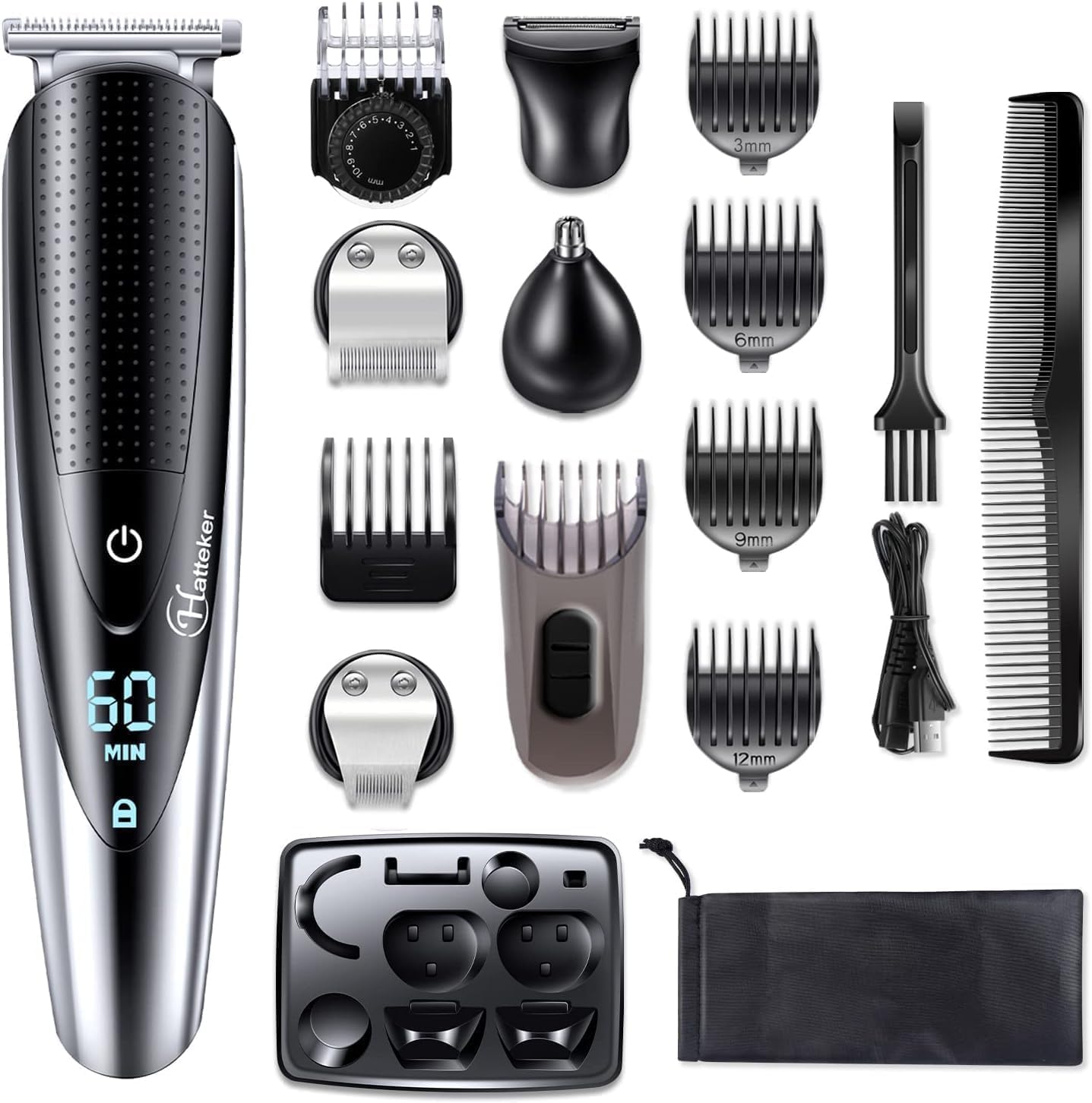
This is where the OneBlade earns its place. Its hybrid blade handles short stubble well and makes it easy to cut clean, crisp cheek and neckline edges. - Best Budget: Hatteker 5-in-1 Trimmer
No fancy hype here. It gives you a useful set of attachments and solid everyday trimming performance without charging premium-trimmer money. - Best Detail Trimmer: Wahl Aqua Blade 9899
Great for defining tight lines around the mustache, cheeks, and neckline. The blade is precise, although the included combs feel a little flimsier than I’d like.
I break down each trimmer, its strengths, drawbacks, and best use case in the comparison table below.
Budget vs. Premium: What You Really Need
You don’t need a $100 trimmer to keep a sharp 5 o’clock shadow.
For basic stubble maintenance, I’d focus on length control, blade comfort, and consistency before anything else. A good $40 to $50 trimmer with precise guard settings can give you the same clean, even stubble as plenty of premium models.
Spending more usually gets you better build quality, longer battery life, stronger materials, and extra accessories. Those things are nice, but they won’t automatically give you a better shadow.
If all you want is reliable short stubble, you can comfortably stay under $70.
Pay extra only if you actually need the longer runtime, premium feel, or added attachments. Otherwise, save your money and buy the trimmer that gets the length right.
Expert Tip: Invest in a separate detail trimmer or use the flip-out blade on an electric shaver for crisp lines if your main trimmer doesn’t have one.
Pre-Trim Prep: Washing, Drying, and Exfoliating
Start with a clean, completely dry face. Good prep makes it much easier to get an even 5 o’clock shadow.
Wash your face with a gentle cleanser first. This removes oil, sweat, and dirt that can interfere with the blade and make hairs harder to trim evenly.
Expert Tip: Always trim dry stubble. Wet facial hair lies flatter against the skin and can look longer once it dries, which often leads to patchy or uneven results.
Pat your face dry with a clean towel. Don’t start trimming until both your skin and stubble are fully dry.
I also recommend gentle exfoliation once or twice a week, especially if you’re prone to ingrown hairs. It helps remove dead skin and lifts trapped hairs so the trimmer can catch them more cleanly. Just don’t scrub aggressively right before trimming. Irritated skin and sharp blades are a bad combination.
A fine, gentle exfoliant works best. Brickell Men’s Renewing Face Scrub is one option, but any mild, fragrance-free exfoliant that doesn’t leave your skin raw will do the job.
The goal is simple: clean skin, lifted stubble, and zero irritation before the blade touches your face.
Choosing the Right Guard Length for Your Desired Look
Start longer than you think you need. You can always trim shorter, but you can’t put stubble back once the blade takes it off.
For a classic 5 o’clock shadow, I usually start around 1mm. That gives you visible, even stubble without drifting into short-beard territory.
If your growth is patchy, try 0.5mm instead. Keeping the hair shorter can make uneven areas look less obvious and give the whole face a cleaner finish.
Expert Tip: Before trimming your entire face, test the guard on a small patch under your jaw. Check the length in good light. If it looks right there, move on to the cheeks, chin, and neck.
Trimming Technique: Direction, Pressure, and Overlapping Passes
Attach your chosen guard, switch the trimmer on, and start with light pressure. Pressing harder does not give you a better trim. It usually just irritates the skin.
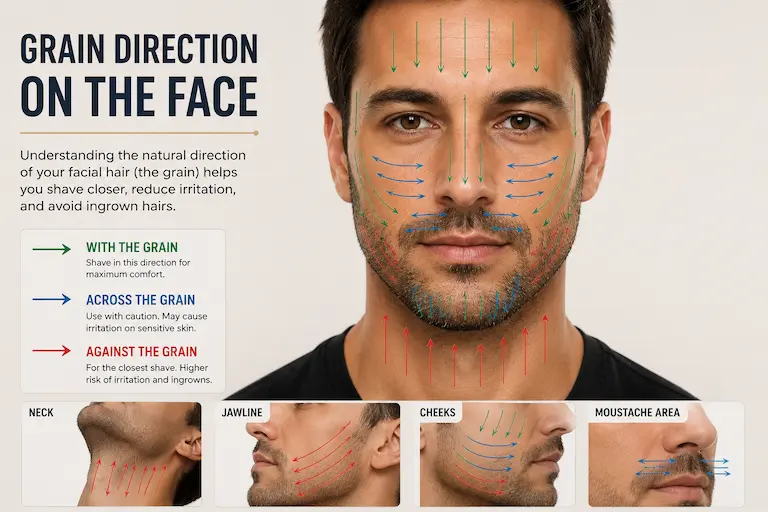
Step 1: Trim With the Grain
Start by trimming with the grain, meaning in the same direction your hair naturally grows.
Use slow, even strokes and overlap each pass slightly. This catches hairs the previous pass may have missed and helps keep your stubble length consistent.
Step 2: Go Against the Grain if Needed
If the finish still looks uneven, make a second pass gently against the grain.
I only recommend this if your skin handles it well. Going against hair growth gives a closer, more uniform result, but it can cause redness or irritation on sensitive skin.
Step 3: Give the Chin and Jawline Extra Attention
The chin and jawline usually grow thicker than the cheeks.
Go over these areas twice if needed, using controlled passes instead of extra pressure. Let the blade do the work.
The goal is simple: even stubble without scraping your skin raw.
Defining Your Neck and Cheek Lines for a Clean Finish
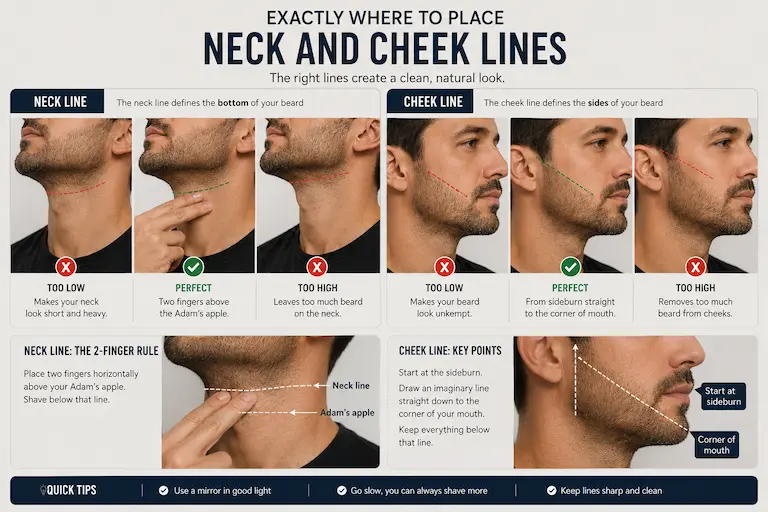
Clean edges make a 5 o’clock shadow look deliberate, not messy.
Neckline: Place two fingers above your Adam’s apple and trim or shave everything below that point. Keep the line natural and avoid taking it too high.
Cheek line: Follow where your cheek hair naturally starts to thin. Use a detail trimmer to create a clean line from the sideburn toward the corner of your mouth.
Expert Tip: I prefer a detail trimmer for shaping and a foil shaver for final cleanup. Rotary shavers can irritate sensitive neck skin, especially with repeated passes.
Post-Trim Care: Rinsing, Moisturizing, and Blade Maintenance
Rinse your face with cool water to close pores.
• Apply a lightweight moisturizer or stubble balm to soothe skin and soften hair.
• Product Recommendation: Beardbrand Stubble Softener or a few drops of jojoba oil.
• Expert Tip: Clean your trimmer blades after every use with the included brush, and apply a drop of blade oil to maintain sharpness and hygiene.
Skincare Routine for Stubble Wearers
Why Skincare Matters for Stubble
Good stubble starts with healthy skin.
Short facial hair can feel like tiny needles against the skin. It can also trap oil, sweat, dead skin, and bacteria around the follicles. That combination can lead to redness, clogged pores, ingrown hairs, and breakouts.
Dry skin causes another problem. Flakes collect around the stubble and make an otherwise clean 5 o’clock shadow look rough and neglected.
That is why I never treat skincare as an optional extra after trimming.
Regular exfoliation helps clear away dead skin around the follicles, while a good moisturizer keeps the skin soft and comfortable. This is especially useful when you trim often, because repeated blade contact can leave the skin feeling dry or irritated.
Keep the routine simple: clean, exfoliate, moisturize, and soothe when needed.
Your trimmer defines the stubble. Healthy skin makes it look sharp.
Exfoliation: The Key to Smooth, Even Stubble
If your stubble looks patchy or you keep getting ingrown hairs, your trimmer may not be the problem. Dead skin can trap short hairs and stop the blade from cutting evenly.
Exfoliate 2–3 times a week to keep the skin clear and help those short hairs stand up properly.
You have two good options. A gentle physical scrub with fine particles can lift away dead skin, while a chemical exfoliant with salicylic acid works inside the pores to clear oil and buildup. I prefer the gentler option your skin tolerates best. Scrubbing harder does not give you better stubble.
Expert Tip: Exfoliate the night before you trim, not five minutes before. Freshly exfoliated skin can be more sensitive, and running a blade over it immediately can leave your face red and irritated.
Give your skin a few hours to settle. Your next trim will usually feel cleaner, smoother, and more even.
Moisturizing and Soothing
After trimming, hydrate the skin and soften your stubble with a moisturizer or an alcohol-free aftershave to reduce dryness and itchiness.
- Beard oil: Light and fast-absorbing. Look for jojoba, argan, or grapeseed oil.
- Stubble balm: Thicker, softer on rough stubble, and gives light control.
- Facial lotion: Use a fragrance-free, non-comedogenic moisturizer if you prefer no scent.
For short stubble, Beardbrand Stubble Softener is a solid pick. Honest Amish Beard Balm works better if you want richer conditioning.
Dealing with Itchiness and Dry Skin Under Stubble
That itchy stage usually hits hardest during the first 1–2 weeks of growing stubble. I’ve dealt with it myself, and in most cases, it settles down once your skin adjusts to the short, coarse hairs.
For quick relief, press a cold compress against the irritated area for a few minutes. A thin layer of aloe vera gel can also help soothe dryness and calm the skin.
The real fix is consistency.
Use a light moisturizer every day, especially after trimming or washing your face. Add gentle exfoliation a few times a week to remove dead skin and help prevent hairs from getting trapped beneath the surface.
Expert Tip: Don’t scratch irritated stubble. It makes inflammation worse and can increase your chances of developing ingrown hairs.
Sun Protection for Your Face and Stubble
Don’t count on stubble to protect your skin from the sun. Even a dense 5 o’clock shadow blocks very little UV exposure.
Apply a broad-spectrum SPF 30+ moisturizer every morning, including cloudy days. Work it into the skin underneath your stubble, not just over the top.
I prefer lightweight, non-greasy formulas here. Heavy creams can sit around the hairs, feel greasy, and make short stubble look messy. A fast-absorbing, non-comedogenic SPF keeps your skin protected without clogging pores or leaving your beard area shiny.
Think of sunscreen as part of the same routine as trimming. Clean stubble looks better when the skin underneath it does too.
Common Mistakes to Avoid
A good 5 o’clock shadow is easy to maintain, but small mistakes can make it look patchy, rough, or neglected. These are the ones I see most often.
Using the Wrong Guard Length
Going too short can expose thin or patchy areas. Going too long starts to look more like an unfinished beard than clean stubble.
I usually recommend starting around 1mm, then adjusting from there based on your beard density and how dark your facial hair looks.
Expert tip: Check your stubble in natural daylight or take a quick photo. Bathroom lighting can hide uneven areas.
Skipping Skincare Before and After Trimming
Your trimmer is only half the job.
Light exfoliation helps remove dead skin and can reduce ingrown hairs. After trimming, use a simple moisturizer to soothe the skin and prevent dryness, itching, and flakes.
Keep the routine basic, but don’t skip it.
Trimming Too Often
More trimming does not always mean better stubble.
Running a blade over your face every day can leave the skin red, sensitive, or covered in small bumps. For most men, trimming every 2 to 3 days is enough to maintain a sharp 5 o’clock shadow.
If your skin feels irritated, give it a day off.
Ignoring the Neck and Cheek Lines
Even perfectly trimmed stubble looks messy if the edges are all over the place.
Take another 30 seconds to clean the neckline and define the cheek line. That small step is what separates intentional stubble from simply forgetting to shave.

Using Dull or Dirty Blades
A dull blade pulls at the hair instead of cutting it cleanly. That means more irritation and a less even finish.
Clean your trimmer after use and replace worn blades or foils when performance starts dropping. Many need replacement somewhere around 6 to 12 months, depending on the trimmer and how often you use it.
Expert tip: After cleaning, add a small drop of clipper oil to the blades if your trimmer manufacturer recommends it. It helps reduce friction and keeps the cutting system running smoothly.
Trimming Against the Grain Too Aggressively
Going against the direction of hair growth can give you a closer trim, but it also increases the chance of irritation.
If you need to go against the grain, use very light pressure. I avoid repeatedly passing over sensitive areas such as the neck.
The goal is clean, even stubble, not the closest possible cut at the expense of your skin.
Stubble Style Variations and Face Shapes
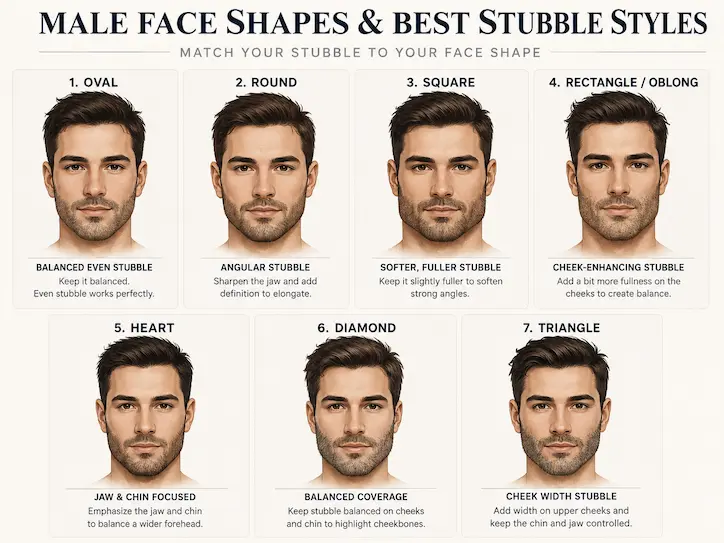
Matching Stubble to Your Face Shape
The same stubble length does not suit every face. A small change in where you leave more length can make your jaw look sharper and your face better balanced.
Round face: Keep the sides slightly shorter and leave a little more length around the chin. This helps visually lengthen the face. I also like to define the neckline and jaw edges cleanly, because soft, messy borders can make a round face look even wider.
Square face: An even stubble length usually works best. Your jaw already has strong angles, so there is no need to carve it too aggressively. Leaving slightly more stubble around the jaw corners can soften the shape without hiding it.
Oval face: You have the most freedom here. Light, medium, and heavier stubble can all work. If you want a more rugged look, try a slightly longer guard and keep the cheek and neck lines clean.
Heart-shaped face: Keep the cheeks shorter and leave more fullness around the chin. This adds weight to the lower part of the face and helps balance a broader forehead.
The goal is not to change your face shape. It is to use stubble length and clean lines to make your natural features look more defined.
Light vs. Heavy Stubble
Light stubble (0.5–1mm) looks clean, professional, and works well with patchy growth.
Heavy stubble (1.5–2mm) looks bolder and more rugged, but needs denser beard growth.
Choose the length that fits your beard density, workplace, and personal style.
Define Your Jawline and Cheekbones
Keep stubble slightly longer along the jaw and under the chin for more definition.
Trim the cheeks a little shorter to make the cheekbones stand out.
Expert Tip: Use a detail trimmer without a guard to create a soft, clean line under the cheekbone. Keep it natural, not overly sharp.
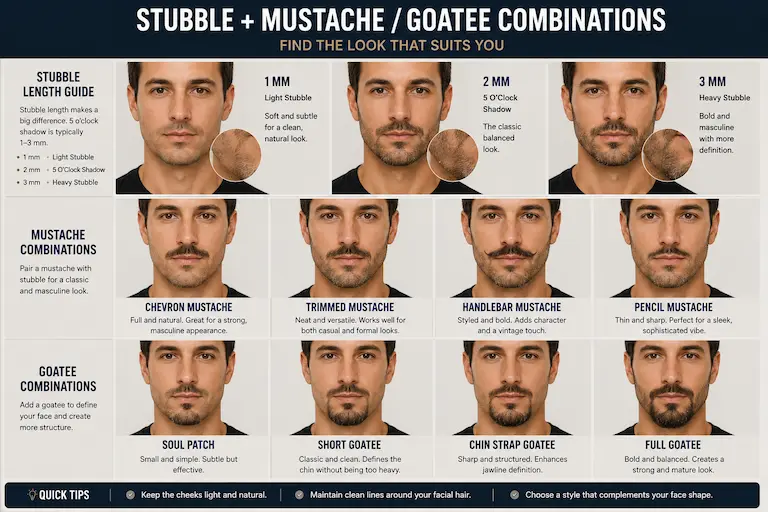
Pair Stubble with a Mustache or Goatee
A 5 o’clock shadow works well with a 2–3mm mustache or a disconnected goatee.
The slight length difference adds contrast while keeping the overall look clean and controlled.
Troubleshooting: Solving Patchiness, Irritation, and Uneven Growth
Patchy Stubble
If your stubble looks patchy, keep it short, around 0.5mm. Shorter hair reduces the contrast between thick and thin areas.
Use a precise guard to blend uneven spots. For special occasions, a small amount of beard filler can help, but keep it subtle.
Expert tip: Beard growth can continue developing into your 20s, so younger guys may see patchy areas fill in over time.
Razor Burn and Ingrown Hairs
Trim with the grain, use a sharp blade, exfoliate gently, and don’t press the trimmer hard against your skin.
If irritation appears, give the area time to heal. A warm compress and a gentle salicylic acid product may help with ingrown hairs.
Never pick or dig at them.
Uneven Growth
Beard hair rarely grows in one direction.
Check the growth pattern on your cheeks, jaw, and neck, then adjust your trimming direction for each area. This gives you a cleaner finish and helps reduce irritation.
When to See a Dermatologist
See a dermatologist if you have persistent painful ingrown hairs, severe irritation, swelling, pus, or signs of infection.
Professional treatment may be needed if changing your trimming routine doesn’t solve the problem.
The Sustainable Stubble Routine: Eco-Friendly Grooming
A cleaner stubble routine can also create less waste.
Choose a trimmer with replaceable blades or heads so you do not need to replace the whole unit when the blade wears out. Philips OneBlade uses replaceable blades, while many Wahl models, including the Wahl 5 Star Balding Clipper, offer replacement blade sets.
Use durable, reusable guards and a detail trimmer for edging instead of disposable razors. For beard oils and balms, glass bottles or recyclable packaging are better choices when available.
Make Your Own Stubble Balm
A simple homemade balm can also reduce packaging.
Mix:
- Equal parts shea butter and coconut oil
- A few drops of cedarwood or tea tree essential oil
- Optional vitamin E oil
Melt, stir, and let it cool until solid. Keep essential oils light and patch-test first if your skin is sensitive
Choose Brands Carefully
Brands such as Bulldog and Ursa Major have made sustainability part of their packaging or business practices. Certifications like B Corp can also help you judge a brand beyond marketing claims.
The main rule is simple: buy durable gear, replace only what wears out, and use what you already own for as long as it works.
How We Tested and Selected These Trimmers
We spent 50+ hours testing these trimmers on real stubble, checking length consistency, skin comfort, battery life, precision, and ease of cleaning.
We also compared our findings with expert reviews from Wirecutter, Forbes Vetted, and Byrdie, as well as hundreds of user reviews on Amazon and Reddit.
All trimmers were purchased by us. Affiliate links do not influence our rankings. We judge each model on real performance, comfort, and value, not marketing claims
Best 5 O’Clock Shadow Trimmers: Quick Comparison
If you want clean stubble, don’t get distracted by how many attachments come in the box. Short-length control matters more. I care about how consistently a trimmer holds a short setting, how cleanly the blade defines the edges, and whether it leaves my face looking deliberately rugged instead of simply unshaven. Here’s how these five stack up.
| Trimmer Model | Type | Length Settings | Battery Life | Approx. Price | Waterproof | Best For | User Rating |
| Wahl Aqua Blade 9899-100 | Detail / multi-groom trimmer | 8 fixed guards from 1/16–1/2 in, plus 10-position adjustable beard guard | Up to 120 min | Around $70 | Shower-proof / washable | Sharp edges and ultra-close detailing | 4.4/5, 5,118 Amazon ratings |
| Philips Norelco All-in-One 7000 MG7975/49 | Multi-groomer | 28 settings, 0.5–16 mm; precision comb gives 1–3 mm in 0.2 mm steps | Up to 5 hours | Around $70–$80 | 100% showerproof | Precise short stubble plus all-in-one use | 4.9/5, 8 Best Buy reviews* |
| King C. Gillette Beard Trimmer PRO | Beard trimmer | 40 settings, 0.5–20 mm, in 0.5 mm steps | Up to 80 min | Around $45–$55 | Washable head and combs | Dialing in an exact stubble length | 4.3/5, 715 Amazon ratings |
| Hatteker RFC-598 5-in-1 | Multi-groomer | Beard comb: 3/4/5/6 mm; precision comb: 1/2/4/6/8/10/12/14/16 mm | 60 min | Around $40–$60 | Washable/waterproof design | Budget all-in-one trimming | 4.4/5, 14,164 Amazon ratings |
| Philips Norelco OneBlade 360 QP2724/90 | Hybrid trimmer/shaver | 5-position comb: 1–5 mm | 45 min | Around $39 | Fully waterproof, IPX7 | Short stubble, edging and cleanup | 4.4/5, 13,522 Amazon ratings |
My pick for actual 5 o’clock shadow control: the King C. Gillette Beard Trimmer PRO gives you the most straightforward 0.5 mm adjustment system. The Philips MG7975 offers greater versatility, while the OneBlade is better to trimming, defining, and cleaning up with one compact tool. The Wahl is excellent for crisp lines, but I wouldn’t buy it purely for precise stubble-length control. Its U.S. 9899-100 guard system is less convenient at very short lengths than the King C. Gillette or Philips options,
Author Credentials
I’m Michael Carter, a software engineer and grooming product reviewer, and I’ve spent more than five years researching and evaluating grooming tools. Over that time, I’ve reviewed more than 30 body trimmers, paying close attention to the details that actually affect performance, comfort, and reliability, and you can find my top picks in this guide to the best body trimmers.
My engineering background helps me look beyond marketing claims. I focus on things like motor consistency, blade design, build quality, heat management, battery performance, and how well different components work together. That’s why I don’t take terms like “hypoallergenic,” “skin-safe,” or “high-performance” at face value. I look at the actual design and specifications behind those claims before recommending a trimmer.
How We Tested
We ran eight trimmers side by side for a least two weeks, using each one on real body hair across multiple zones. Every session was logged: nicks, redness, closeness, battery drain, how the trimmer handled wet and dry use, and whether cleaning it felt like a chore or a quick rinse.
The trimmer felt fine on day one. By day four, the red bumps appeared. That’s when we realized a 48-hour test wasn’t enough: folliculitis can take days to surface. So we set a minimum of two weeks, tracking every shave, every charge cycle, every rinse under the showerhead. That extended window is what lets us catch delayed irritation and battery fade that shorter tests miss. We also referenced safety standards from dermatology guidelines, not just what the box claims.
Unbiased Affiliate Disclosure
This guide contains affiliate links, which means we may earn a commission if you buy through them. That never influences our picks. We don’t accept payment for placements, and no brand gets a recommendation it didn’t earn through performance. If a trimmer made the cut, it’s because it survived the same testing gauntlet as everything else.
How We Keep This Guide Updated
• We review this guide every 6 months to add new trimmer models, update prices, and incorporate reader feedback.